
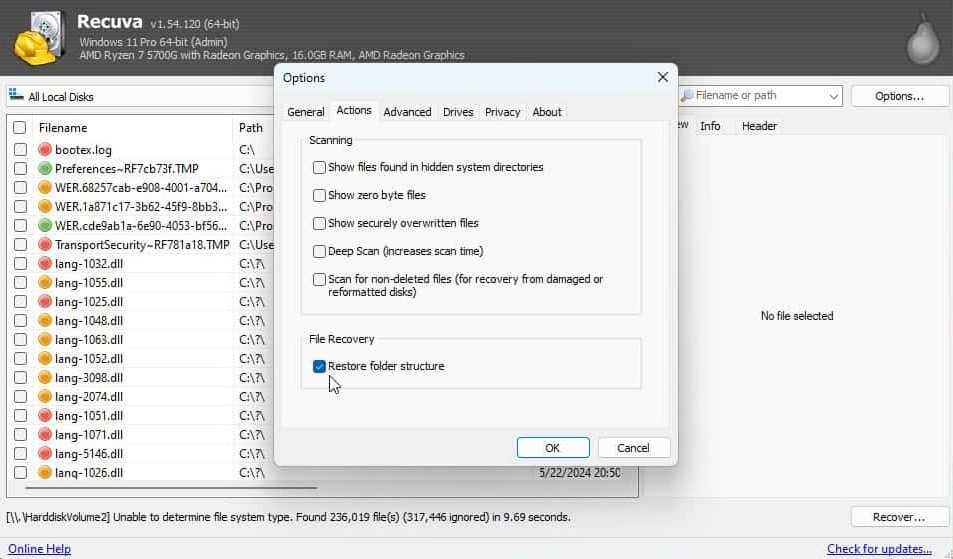
The tool reads sectors either way; the difference is how much metadata survives and how results look in the list. NTFS on a quiet internal disk often keeps friendlier names after a recent delete. FAT-family volumes on cards may go empty-looking faster after a format or camera “repair.”
exFAT is common on large removable media; remember FAT32’s 4 GB file-size ceiling when you pick a recovery destination for big videos. Choosing the wrong destination format produces “out of space” errors even when the disk has free gigabytes.
Practical checks
- Glance at the volume’s format in Properties or Disk Management before you blame the software.
- Prefer recovering to NTFS or exFAT when individual files may exceed 4 GB.
- After a camera or phone “formatted” the card, expect Deep Scan noise; filter by type and size.
Filesystem overview: How it works. Write errors: Fixes.